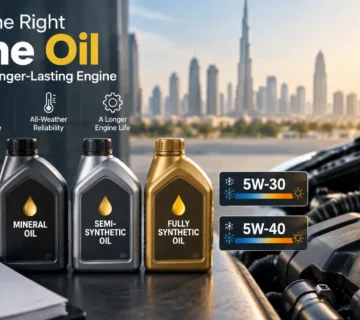
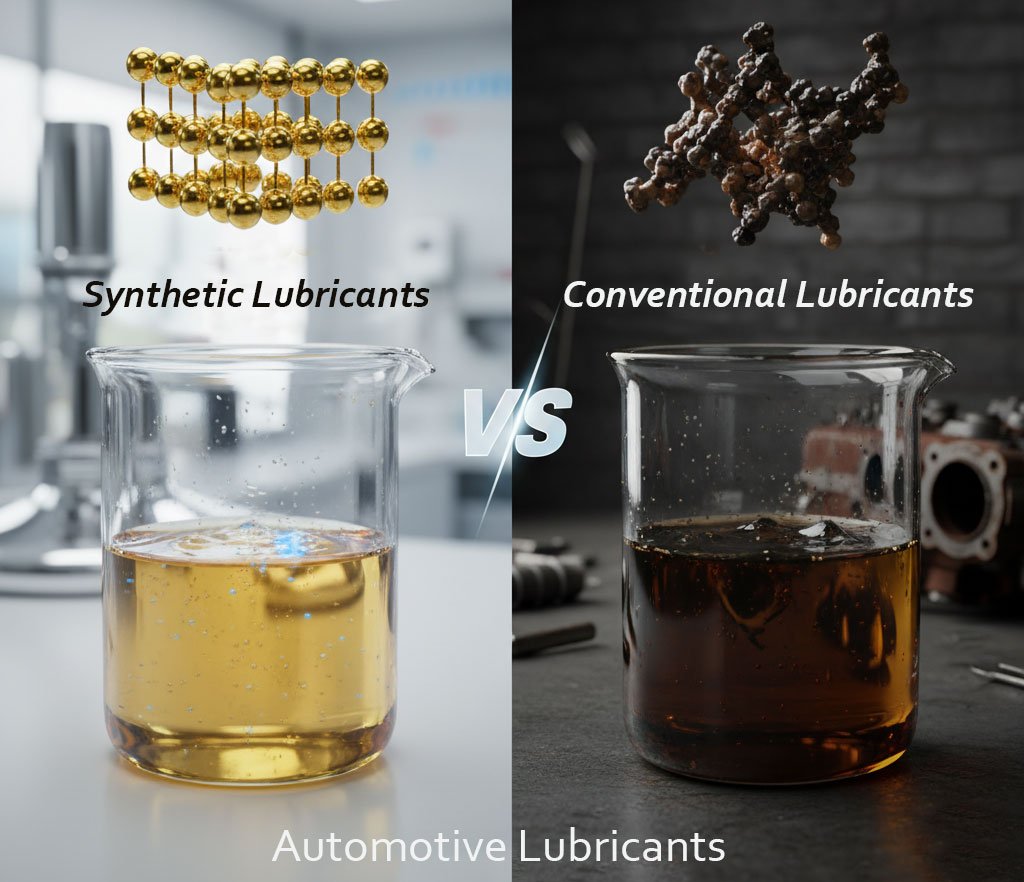
One of the most talked-about debates in the maintenance of the auto is what kind of oil is better to use — synthetic or conventional lubricants. Engine oils of both kinds are necessary because they help to lower friction, cool the engine’s parts, and prevent wear. The point is to arrive at the same result, though the means they used and the way they perform under different conditions show big differences. Understanding these differences will put you in the right position to make the choice concerning your vehicle’s performance, durability, and fuel economy.
What Are Conventional Lubricants?
Conventional motor oil is also called mineral oil and is basically the same as the oil that one can find in nature. After it is extracted, the crude petroleum goes through a refining process, which removes the impurities, but the product still contains some natural hydrocarbons. These oils sometimes receive additives that improve viscosity, prevent oxidation, and fight corrosion.
Conventional automobile lubricants have been around for a long time and can still be used in many older engines or vehicles with fewer performance requirements. They are generally cheaper than synthetic oils, which is a good reason for car owners to opt for them if they want to save money.
On the other hand, conventional oils will most likely break down faster if they are subjected to extreme hot or cold conditions, and thus the protection will be reduced and oil change intervals will be shorter. Eventually, these oils could create sludge and deposits that will impact the cleanliness of the engine and its efficiency.
What Are Synthetic Lubricants?
The origin of synthetics is the chemical alteration of base oils, which are either highly refined or synthesized entirely to achieve a uniform molecular structure. A controlled process is used to remove all impurities, yielding an oil that can be used almost unchanged even under very different conditions.
The additives used in synthetic oils are advanced to the point where the oil can keep its viscosity, resist oxidation, and at the same time protect against wear. These oils are the perfect solution for modern engines that are working within stricter limits and at higher temperatures, since the oils can flow easily in the cold and at the same time have strong lubrication even at high temperatures.
Typically, synthetic oil will set you back more initially, but it will last longer, help you save fuel, and provide better protection, which means that your maintenance will cost less in the long run.
Performance Comparison: Synthetic vs Conventional
Engine Protection and Wear Resistance
Synthetics are more effective than regular oils in fighting engine wear. Their single molecular structure makes them friction reducers to a higher degree, thus the engine runs smoother and component wear is minimal for the time period.
Temperature Stability
Regular oil will generally become thicker in the cold and thinner when hot, thus its function will be affected. Whereas, synthetic oil keeps its viscosity even at all temperature extremes and thus the vehicle is always protected, whether it is a freezing winter morning or a hot summer afternoon.
Cleanliness and Sludge Prevention
Synthetics are formulated to resist oxidation and breakdown reactions more than conventional products. That is why the engines are cleaner, in particular, if the oil change intervals are long. Besides, conventional oils can produce sludge, which blocks the engine passages and lowers performance.
Oil Change Intervals
Synthetics are able to cover 10,000–15,000 kilometers (in some cases, the number can be higher, e.g. by brand and driving conditions), while regular oil needs changing every 5,000–7,000 kilometers. That is to say that synthetic users who like to drive long distances or have a certain number of maintenance stops per day will find them very convenient.
Fuel Efficiency
One of the reasons why synthetic oil is considered the best is that it eliminates friction, thus the engine can work more efficiently. Over time, this results in fuel cost savings which are quite significant in the case of commercial or high-mileage vehicle drivers.
Which One Should You Choose?
The deciding factor between a standard and a synthetic oil will most probably be the type of your vehicle, your driving habits, and the availability of budget.
- In case your car is of the latest model, especially if the engine is either turbocharged or of high-performance type, then the use of synthetic oil is the only logical option. This is the one that can offer the best protection, the longest service life, and the performance that is most stable.
- If regular oil changes are done, conventional oil can still work effectively for older cars or those that are used mainly for short city trips.
- Synthetic blends may be the choice of drivers who want to have a bit of both worlds. These mixes offer the cheapness of a regular oil, together with some of the features of a fully synthetic one.
It is worth mentioning that to some extent, synthetic and conventional lubricants are both essential for engine health and efficiency. While conventional oils can still be used as a budget-friendly option for standard driving conditions, to a large extent, synthetic lubricants are better in terms of protection, performance, and durability.
In the end, the use of good-quality products from reliable lubricant manufacturers in UAE leads to optimal engine performance, stability, and long-term protection of any vehicle type. When confused, always consult your manufacturer’s instructions — the right lubricant can be a lifesaver for your engine, and make it last much longer.
FAQs:
1. What is the main difference between synthetic and conventional lubricants?
Synthetic lubricants are designed chemically for very stable performance and thus more protection, while conventional ones are made from crude petroleum and may not last very well if subjected to high temperatures or other severe situations.
2. Can I switch from conventional oil to synthetic oil?
Certainly, you are free to change whenever you want. Modern synthetic oils are designed to work perfectly well with conventional ones. The only caution is to use the right viscosity and specs recommended by your car maker.
3. Are synthetic lubricants worth the higher cost?
Definitely yes. Synthetic oils have higher upfront costsyet they extend the service interval of the oils and make the engine more protected and fuel-efficient, and the vehicle needs less maintenance, thus eventually saving the user money.
4. How often should I change synthetic oil compared to conventional oil?
The typical mileage interval for synthetic oil is between 10,000 and 15,000 km, whereas conventional oil changes are due at every 5,000 to 7,000 km. It should be noted that the exact intervals depend on driving conditions and guidelines given by the manufacturer.
5. Where can I find quality automotive lubricants in the UAE?
You can source premium-grade synthetic and conventional oils from trusted Black Bulls lubricant manufacturers in the UAE, known for producing high-performance formulations that meet international standards.