Choosing an engine oil brand shouldn’t be based on popularity or advertising. You need the one that matches the engine design, operating conditions, and provides good long-term performance. Automakers spend a lot of money on engine development, and engine oil is key to safeguarding that investment.
Thus, many car manufacturers endorse or approve certain engine oil brands. These oils have been tested to meet very rigorous performance, durability, and emission standards. Picking the right oil brand is one of the ways to keep the engine running like the manufacturer intended for a long time.
Why Car Manufacturers Recommend Specific Engine Oil Brands
Today’s engines are tested to run at very high pressures and temperatures. Tight tolerances, turbocharging and advanced emission systems make it very difficult to get the right performance.
Some engine oil manufacturers also belong to certain brands. However, oils from these brands:
- have the correct viscosity and lubrication characteristics for the engine
- help to prevent wear, sludge, and oxidation
- assist in fuel efficiency and emission control systems
- work well even after long service intervals
Such recommendations are made mainly based on the engineering requirements.
How Car Manufacturers Approve Engine Oil Brands
Typically an oil has to undergo very comprehensive tests before it is given a green light.
The procedure for getting an oil approved generally comprises:
- Initial screening in the lab for the fluid’s thickness, ability to resist oxidation, and effectiveness in limiting deposits
- Running the engine on a bench for part of the life cycle while simulating real-life conditions
- Analyzing wear, the release of particles, and other factors related to the oil’s durability over a long period of time
- Meeting or surpassing requirements of the API, ACEA, or specific carmaker’s standards
Only those oils that fulfill these criteria can be found on the list of approved or recommended products.
Best Engine Oil Brands Recommended by Major Car Manufacturers
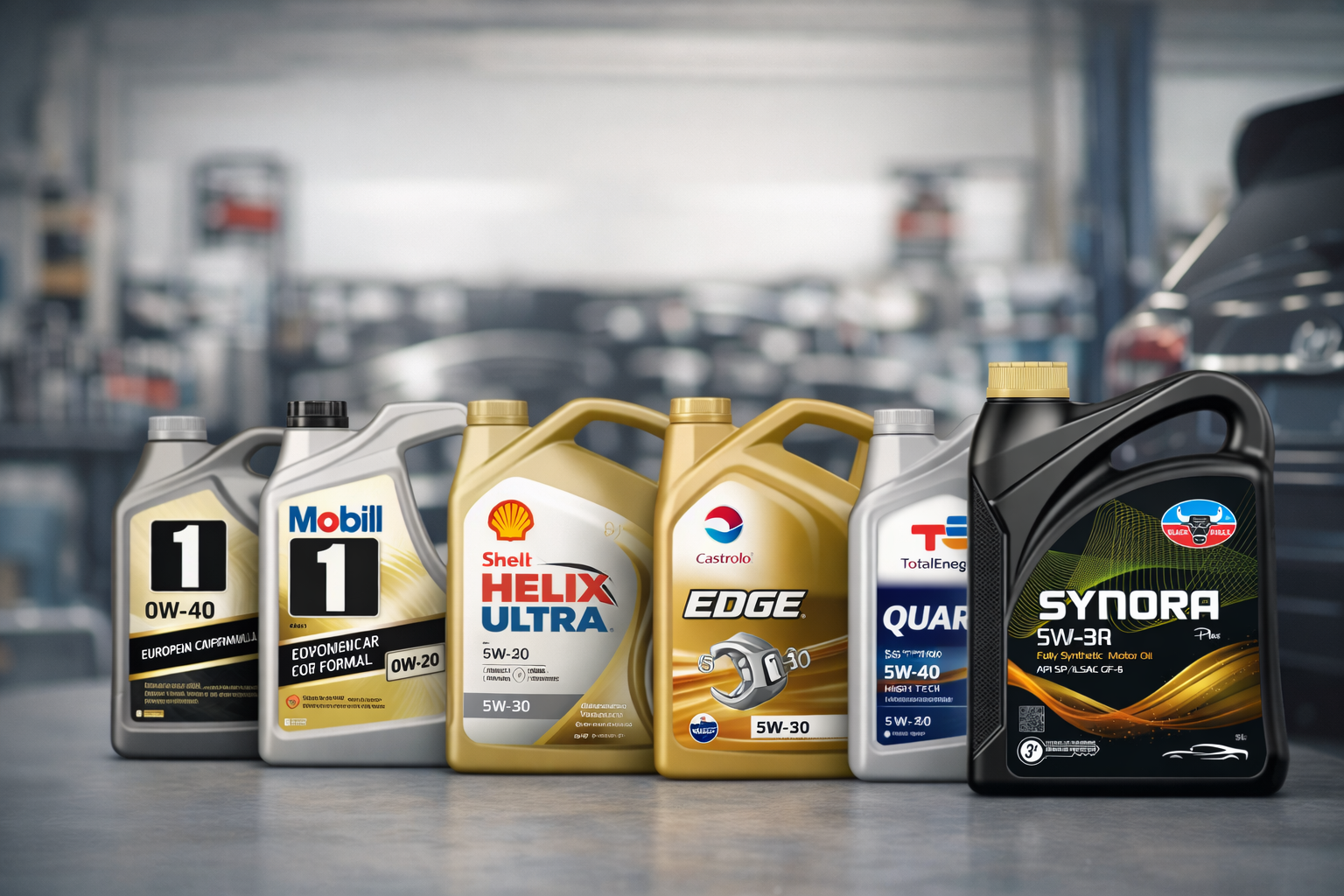
Many global oil brands are repeatedly approved across multiple vehicle manufacturers.
Commonly recommended brands include:
These engine oil brands are commonly used in a wide variety of modern vehicles. The formulations of these oils were made to satisfy the performance standards of various types of engines, so they can be used in different brands of passenger and commercial vehicles.
Black Bulls Grease & Lubricants: Delivering Beyond Expectations
Dubai-based Black Bulls Grease & Lubricants is a manufacturer of engine oils specially engineered to match the needs of modern vehicles and is comparable to the international quality standards.
Black Bulls is determined to hold consistency, thermal stability, and protection features of the product through regular quality control checks. Besides this, Black Bulls is a brand that has established a line of automotive and industrial lubricants.
Expanding worldwide distribution network reaching various global markets, Black Bulls is gaining recognition among workshops, fleet operators, and distributors as a trustworthy brand. Its focus remains on formulation discipline, consistent quality, and the ability to adapt to different operating conditions, thus making the brand a competitive alternative to the global lubricants market.
Engine Oil Recommendations by Vehicle Type
Passenger Cars
Mostly latest or modern passenger cars require fully synthetic/ semi-synthetic oils that match manufacturer specifications for fuel efficiency and latest emission control.
Luxury and Performance Vehicles
High-performance engines need advanced synthetic oils with strong thermal stability and wear protection.
SUVs and Light Trucks
Oils with higher load-carrying capability and robust additive packages are preferred, especially for towing or off-road use.
Commercial and Fleet Vehicles
Heavy-duty formulations and extended-drain oils help reduce downtime and maintenance frequency.
In each instance, the top engine oil is essentially the one that aligns perfectly with the engine specification, rather the brand name.
Benefits of Using Engine Oil Brands Recommended by the Manufacturer
There are definite benefits in using only authorized engine oil brands:
- The engine is protected better and will last longer
- The fuel consumption is improved
- The engine parts stay cleaner
- The risk of breakdown is minimized
- You stay within the terms of the warranty
In the long run, such advantages contribute to the reduction of overall car ownership costs and help maintain the resale value.
Risks of Using Non-Branded Engine Oil Brands
Engine oils that are not up to the standards of the car manufacturer can lead to problems like:
- More engine wear and friction
- Sludge and deposits
- Less fuel economy
- Bad cold start performance
- Potential warranty issues
Although the oil looks cheaper, the final cost may be much higher.
The top engine oil brand shouldn’t be judged just by the advertising claims or the price. It’s more about manufacturer approval, the correct specification, and the actual engine performance after using the oil.
By sticking to the manufacturer’s recommendations, you allow the engine to work within its designed limits. No matter if your vehicle is a daily driver, a luxury car, or a workhorse fleet vehicle, oil brand choice is the easiest way to keep your engine in good condition.
Always check your owner’s manual or consult a qualified automotive professional before selecting black bulls engine oil. Choosing a manufacturer-approved oil, which can prevent costly repairs in the future.