Hydraulic pumps don’t get breaks.
Whether it’s a tractor working through dry farmland, a press machine cycling in a factory, or heavy equipment lifting tonnes of material on a construction site, the pump is constantly under load. Pressure builds. Heat rises. Components move at high speed with minimal clearance between them.
Under those conditions, even a small lubrication failure isn’t minor. It’s expensive.
Hydraulic oil is often treated as a background fluid, something that simply “runs the system.” In reality, it’s the single most important protective layer inside your hydraulic pump. When pressure never stops, oil quality becomes the difference between smooth operation and sudden downtime.
Let’s look at what’s really happening inside that pump and how the right oil quietly keeps everything alive.
The Pump Lives on a Thin Film
Inside a hydraulic pump, moving metal parts operate with incredibly tight tolerances. Gear teeth mesh. Pistons slide within cylinders. Vanes rotate against cam rings. These surfaces aren’t meant to grind against each other.
They ride on a microscopic film of oil.
That oil film carries the load. It prevents direct metal-to-metal contact. Without it, wear begins immediately, scoring, pitting, and surface fatigue follow quickly. Once surfaces are damaged, efficiency drops and heat increases. It becomes a cycle that feeds itself.
Continuous pressure makes this even more critical. High-pressure systems squeeze that lubricating film thinner and thinner. If the oil doesn’t have the correct viscosity and film strength, it simply collapses under load.
That’s when wear accelerates.
Under Pressure and Heat, Weak Oils Break Down
Every hydraulic system generates heat. Pumps working under continuous pressure amplify it.
When oil temperature rises, viscosity drops. If the oil thins out too much, it loses its ability to maintain that protective layer between moving parts. The pump starts operating on the edge of boundary lubrication, where metal contact becomes unavoidable.
Good hydraulic oil resists this breakdown.
High-quality formulations include base oils with strong thermal stability and oxidation resistance. They don’t degrade quickly when exposed to elevated temperatures. They don’t form sludge or varnish deposits that block valves or stick components.
In real-world applications, especially in regions where ambient temperatures are high, oil stability is not optional. Many operators in the Middle East understand this well. Choosing a reliable hydraulic oil supplier in UAE businesses’ trust is often less about branding and more about performance under extreme heat.
Because when oil fails in hot climates, systems fail fast.
Anti-Wear Additives: The Silent Guardians
Even with perfect viscosity, pressure still creates stress. That’s where additive chemistry steps in.
Contemporary hydraulic oils have anti-wear additives, which are usually zinc-based compounds or more sophisticated ashless formulations. These additives undergo a chemical reaction at the high-pressure contact areas to create a protective layer that is detached later.
Think of it as a chemical shield. When surfaces start to touch under extreme load, the additive layer takes the damage first. It prevents scoring and micro-welding between components.
Without this protection, pumps in heavy-duty systems, like agricultural harvesters or injection moulding machines, can show wear patterns surprisingly quickly.
Additives don’t make noise. They don’t show up visibly. But they’re constantly working at the microscopic level to prevent catastrophic damage.
Oxidation and Contamination: The Hidden Threats
Continuous pressure means continuous circulation. And circulation exposes oil to air, moisture, and contaminants.
Oxidation happens when oil reacts with oxygen at elevated temperatures. The result? Acid formation, sludge build-up, and increased viscosity. Over time, this restricts flow and damages seals.
Contamination adds another layer of risk. Dust from farming operations. Metal particles from wear. Water ingress in humid environments. Each of these reduces oil performance and increases pump wear.
High-grade hydraulic oils are formulated with oxidation inhibitors and strong demulsification properties. They efficiently separate water rather than emulsifying it. Besides that, they keep the filterability intact, hence contaminants can be removed before they cause any damage.
However, oil quality by itself is not sufficient. The maintenance discipline is equally important. Frequent filtration monitoring and oil testing can considerably extend the life of the pump.
The best operators treat hydraulic oil as a monitored asset, not just a consumable.
Foam and Air Release Matter More Than You Think
Under constant pressure, air entrainment becomes a serious issue.
If hydraulic oil traps air bubbles, compressibility increases. That reduces system efficiency and causes erratic movement. Worse, collapsing air bubbles create micro-dieseling effects, tiny implosions that damage internal surfaces.
A properly formulated oil releases air quickly. Its foaming tendency is extremely low, even when it is agitated and subjected to high flow rates.
Mobile hydraulic systems of excavators or loaders, which operate in a manner where movement and vibrations increase the risk of aeration, are the main systems where this consideration holds great significance. An oil with good stability not only ensures efficient power transmission but also avoids pump cavitation damage through the provision of a consistent lubricant film.
It usually takes the operators quite some time to realise such a characteristic when they experience noisy pumps.
Viscosity Stability: Consistency Under Load
Viscosity isn’t just about thickness. It’s about staying consistent across temperature ranges.
Hydraulic systems don’t operate at one fixed temperature. They start cold in the morning and run hot by midday. Oil that thickens too much when cold causes sluggish starts and strain on the pump. Oil that thins excessively when hot loses protective film strength.
High viscosity index (VI) oils maintain more stable performance across these fluctuations. That stability protects pumps during startup when most wear occurs and during peak operation.
For industries running equipment around the clock, especially in agriculture and heavy manufacturing, that consistency translates into measurable longevity.
The Cost of Getting It Wrong
Hydraulic pump replacement isn’t cheap. Neither is downtime during harvest season nor factory production.
Yet oil decisions are sometimes made purely on price.
It’s understandable. Oil is purchased in bulk. Margins are tight. But lower-cost formulations often sacrifice additive quality, base oil refinement, or long-term stability.
The difference might not show up in the first month. It appears gradually, with increased operating temperature, reduced efficiency, noisy operation, and shortened seal life.
When you add up maintenance hours, part replacements, and lost productivity, the savings disappear quickly.
That’s why experienced operators focus on performance specifications, field track record, and supplier reliability rather than just price per litre.
Choosing Oil That Matches the Application
Different hydraulic systems have different demands.
For instance, high-pressure industrial presses need oils with very strong anti-wear and oxidation resistance properties. Similarly, agricultural machinery that is constantly exposed to dust and temperature changes will get the most out of oils with stable viscosity and good contamination tolerance. Also, mobile construction equipment would highly benefit from oils having great air release and foam control.
It’s very important to match the operating conditions with the correct oil characteristics.
This is probably the main reason why partnering with a knowledgeable hydraulic oil supplier from the UAE that industries rely on can be very helpful, not only for the physical supply of products but also for technical guidance, such as ISO viscosity grade selection or oil analysis support, which in turn can help operators to save money by avoiding mismatches of the products.
Because protection isn’t just about pouring oil into a tank. It’s about selecting the right chemistry for the workload.
Pumps Are Strong: But They’re Not Indestructible
Hydraulic pumps are engineered for resilience. They’re built to handle force, pressure, and long duty cycles.
But they depend entirely on oil to survive.
When that thin film holds steady, systems run smoothly for years. When it fails, whether due to heat breakdown, contamination, poor viscosity stability, or weak additives, wear accelerates quickly.
The truth is simple. Under continuous pressure, oil becomes the first line of defence.
Treat it that way.
Choose quality. Monitor condition. Understand your operating environment. Because in hydraulic systems, protection isn’t visible, but it’s always working.
Continuous pressure demands continuous protection.
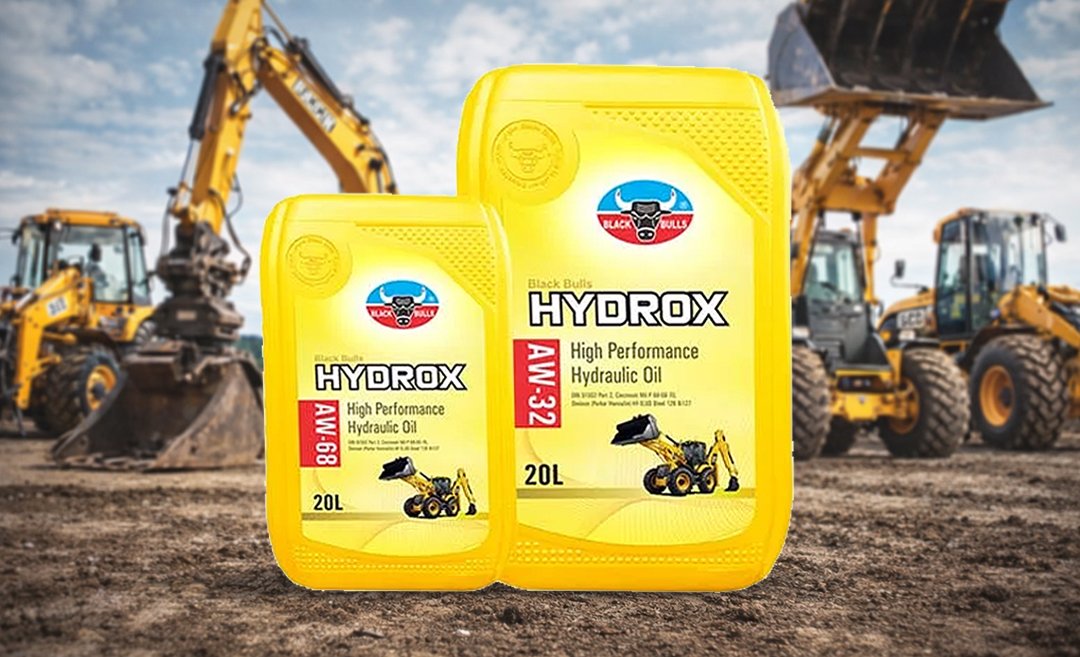
At Black Bulls Grease & Lubricants Manufacturing LLC, we formulate hydraulic oils designed for thermal stability, anti-wear performance, and heavy-duty reliability.
Get in touch to discuss the right solution for your machinery.