From the outside, a production line might seem to be under perfect control with shiny panels, automation, digital displays, and robot arms performing operations accurately.
Inside the equipment, the story is different.
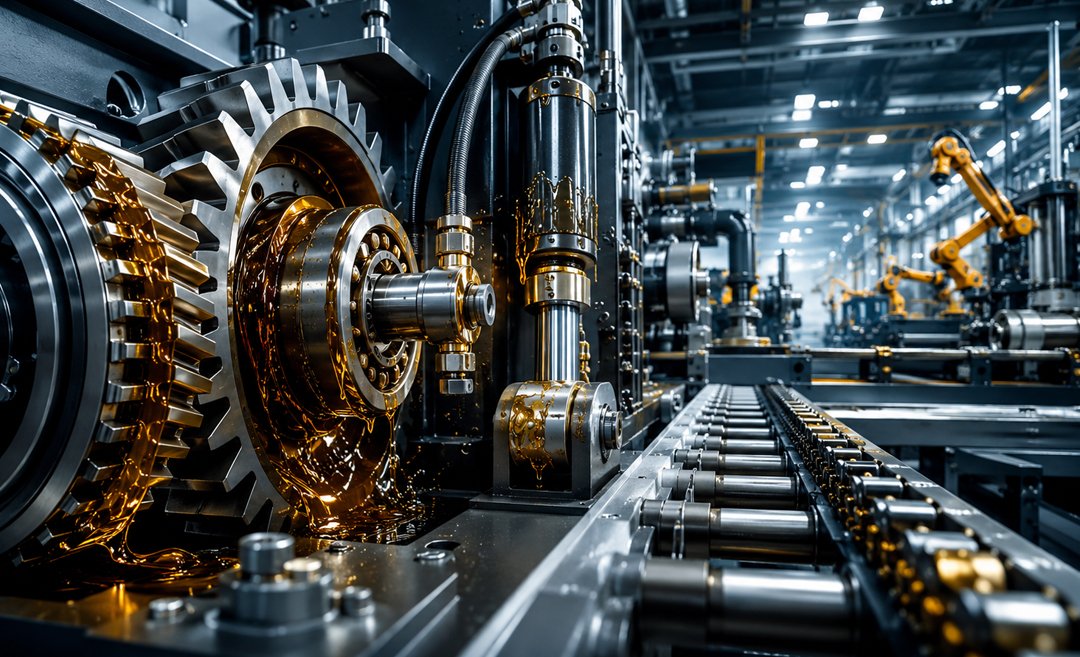
Metal is moving against metal. Bearings are carrying heavy loads. Gears are transferring torque. Hydraulic systems are working under pressure. Heat builds up quietly. Contamination enters slowly. One weak point in lubrication can bring an entire operation to a stop.
That is why industrial lubricants matter so much in 2026.
They are not just oil used to keep machines running. They are part of the machine’s performance system. The right lubricant can reduce wear, improve efficiency, support higher loads, handle extreme temperatures, and extend the life of expensive equipment. The wrong one can do the opposite, often before anyone notices.
For plant owners, maintenance engineers, factory managers, and procurement teams, lubrication is no longer a routine purchase. It is a reliability decision.
Machinery Is Working Harder Than Before
Industrial equipment today is expected to do more with less downtime.
Factories are running longer shifts. Automated systems are pushing faster production cycles. Heavy machinery is being asked to perform in hotter, dustier, and more demanding environments.
Even smaller manufacturing units now rely on CNC machines, compressors, hydraulic presses, packaging lines, conveyors, and robotic systems that need consistent protection.
When machines operate at higher speeds and loads, the lubricant has to maintain a stable film between moving parts. If that film breaks down, friction increases. Once friction increases, heat rises. After that, wear accelerates quickly.
A bearing failure may start with poor lubrication. A gearbox issue may begin with oil degradation. A hydraulic system may lose efficiency because the fluid is contaminated or has the wrong viscosity.
These failures rarely happen all at once. They start small, almost invisible.
Then one day, the machine stops.
And when that happens, the cost is not limited to a replacement part. There is lost production, labour downtime, emergency repair, delayed orders, safety risk, and sometimes damage to connected systems.
Good Lubrication Protects More Than Moving Parts
A quality industrial lubricant does several jobs at once.
It helps reduce friction, but apart from that, it deals with heat, prevents corrosion, picks up and carries dirt, seals small gaps, distributes the load, and generally makes the machinery work better.
In hydraulic machinery, the fluid does more than lubricate components. It also transfers power. If the fluid is unstable or contaminated, the system might be sluggish, overheat, or lose pressure. In manufacturing, that can affect accuracy, speed, and product quality.
Gear oils face a different kind of pressure. A gearbox in a production plant may run continuously under heavy load. If the oil cannot handle pressure or thermal stress, gear teeth can suffer pitting, scoring, or premature wear. The machine may continue running for a while, but efficiency drops. Noise increases. Vibration appears.
The lubricant is often the first line of defence, but only when it is selected correctly.
Lubricant Selection Is Becoming More Technical
Procurement teams sometimes treat lubricants as a price comparison exercise. That approach is becoming risky.
Modern machines are more specialised. OEM recommendations are more specific. Operating environments vary widely. A lubricant that works well in one plant may not be suitable for another, even if the equipment looks similar.
Viscosity, additive chemistry, oxidation stability, water separation, load-carrying capacity, thermal resistance, and compatibility all matter. So does the actual working condition of the machine.
A factory in a cooler indoor environment does not face the same lubrication challenges as a cement plant, steel facility, logistics hub, or construction equipment fleet operating in the UAE heat. This is where experienced lubricant suppliers in Dubai become useful, because they understand both industrial requirements and regional operating conditions.
The right supplier is not simply the one offering the lowest rate per drum. It is the one that can help match the lubricant to the machine, the load, the service interval, and the working environment.
That difference can save a company a lot of money over time.
Downtime Is More Expensive Than Premium Lubrication
Many factories still try to stretch lubricant change intervals without oil analysis or proper inspection. It feels like a cost-saving. In many cases, it is just delayed damage.
Industrial lubricants degrade during use. Heat, oxidation, moisture, dust, metal particles, and chemical contamination all affect performance. Once the lubricant loses its protective properties, the machine is exposed.
The frustrating part is that poor lubrication rarely announces itself clearly. A machine may continue operating while internal wear increases. By the time warning signs appear – noise, vibration, overheating, leakage, or pressure loss – the damage may already be developing.
A slightly higher investment in the right lubricant is often far cheaper than an unplanned shutdown.
A smart lubrication programme can support:
- Longer equipment life
- Fewer emergency breakdowns
- Better energy efficiency
- More stable production output
- Lower maintenance costs
It is not glamorous work, but it is the kind of work that keeps a plant profitable.
The Supplier Relationship Matters More Now
For industrial companies and procurement teams, choosing the right lubricant partner is becoming just as important as choosing the right product.
Reliable lubricant suppliers in UAE should be able to offer consistency, technical guidance, product availability, documentation, and support across different industrial applications.
In sectors such as manufacturing, construction, marine, logistics, steel, energy, and heavy equipment, availability can be critical. Waiting too long for the correct lubricant can delay maintenance or push teams into using substitutes that may not be suitable.
A good supplier should understand the machine, the load, the operating temperature, the OEM recommendation, the service interval, and the working environment. These details prevent expensive assumptions.
For companies operating in high-pressure industrial settings, that support matters.
Small Lubrication Mistakes Can Become Big Operational Problems
Some of the most common lubrication issues are surprisingly simple.
Using too much grease. Using too little. Mixing incompatible lubricants. Storing drums in poor conditions. Leaving containers open. Using dirty funnels. Ignoring oil colour changes. Extending drain intervals without testing. Buying based only on price. Applying one lubricant across multiple machines without checking specifications.
None of this sounds dramatic. Yet these habits can reduce machine life and increase failure risk.
In 2026, as production costs rise and downtime becomes harder to absorb, these small mistakes are harder to justify. Maintenance teams need clearer lubrication procedures. Procurement teams need better technical alignment. Operators need simple training on what to look for during daily machine checks.
Lubrication is not only the maintenance department’s responsibility. It affects the whole operation.
A practical way to think about industrial lubricants
Industrial lubricants are not a minor background item in modern operations. They sit quietly inside the equipment, but their impact is visible everywhere – in performance, reliability, maintenance cost, safety, and production continuity.
The plants that understand this will run cleaner, longer, and with fewer surprises. The ones that ignore it may still run, but not as efficiently as they think.
Keep your machinery protected with lubricants built for heat, pressure, and heavy-duty performance.
Partner with Black Bulls Grease & Lubricants Manufacturing LLC for industrial lubrication solutions that keep operations moving with confidence.