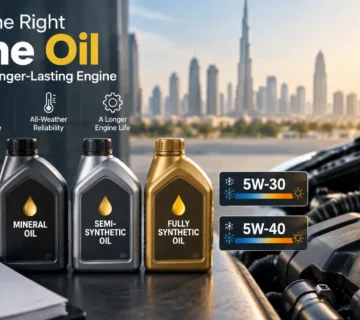

OEM vs aftermarket oil is an important consideration when choosing the right engine oil for your vehicle. Engine oil helps reduce friction, carry heat away, keep dirt from settling and help your engine last. Picking the wrong oil can cost you, so it’s worth choosing the right one.
However, with numerous types and variants available, choosing between OEM oil and aftermarket oil continues to be a common consideration. Although OEM (Original Equipment Manufacturer) engine oils are formulated to match the specifications set by your vehicle OEM, aftermarket oils offer a greater variety of formulas and price points.
Black Bulls offers a detailed comparison of OEM and aftermarket engine oils, highlighting their key differences and advantages to help you choose the right oil for your engine.
What is OEM Oil?
OEM stands for Original Equipment Manufacturer. It can refer to the manufacturer of the vehicle or the parts and fluids supplied or approved under that brand’s name.
OEM oil is engine oil that is branded by the manufacturer or their recommended manufacturer for a particular vehicle make and model. It is often the oil used when the car is first filled at the factory or serviced at an authorised dealership.
Most OEM oils are not actually made by the manufacturers. They are usually produced by a major lubricant company and blended to meet the specifications. So, it’s just oil that’s been formulated and tested for the performance you depend upon from your engine.
What is Aftermarket Oil?
Aftermarket oil is engine oil products that are produced by independent lubricant companies and not the vehicle manufacturer. You can buy the aftermarket oil from gas stations, mechanic shops, auto stores, or online.
The aftermarket oils vary from generic to premium synthetic oils. Many are formulated to meet the same standards and approvals as OEM oils.
Some of them are designed for specific applications like turbocharged, diesel, hybrid and high-mileage engines.
OEM vs Aftermarket Oil: Key Differences
When comparing OEM oil vs aftermarket oil, the real differences come down to a few practical areas.
Oil Formulation and Additives
Engine oil is made of base oil, such as mineral, semi-synthetic or fully synthetic oil, combined with an additive package. An additive package provides detergents to keep the engine clean, anti-wear agents, antioxidants, and viscosity index improvers.
OEM oils are blended to meet a manufacturer’s specific needs. Whereas an aftermarket quality oil can be formulated to the same targets, and some are created to meet some manufacturer’s requirements.
The difference is not the “OEM” or “aftermarket” label but the quality of the base oil and the additive balance. A well-formulated aftermarket oil can outperform a poorly matched OEM-labelling one, and vice versa.
Manufacturer Specifications and Approvals
This is where it counts the most. Manufacturers have their own oil standards, like VW 504 00/507 00, MB-Approval 229.5, BMW Longlife-04 or GM Dexos. These are the manufacturer approvals, meaning the oil has been officially tested and approved for that brand’s engines.
Alongside these, general industry standards apply:
- API (American Petroleum Institute) ratings such as API SP show that an oil meets certain performance and protection levels.
- ACEA (European Automobile Manufacturers’ Association) classifications such as A3/B4 or C3 are common for European vehicles.
- ILSAC standards such as GF-6 apply to many petrol engines in the US and Asian markets.
If an aftermarket oil has the same API/ACEA certifications and the same manufacturer approval as your owner’s manual specifies. Achieving the same documented requirement as the OEM. Which standards are relevant depends on your vehicle and market, so always check your manual.
Viscosity and Performance Requirements
Viscosity grade (such as 0W-20, 5W-30, or 5W-40) indicates how the oil flows at both cold and hot operating temperatures. Modern engines today are designed to have high tolerance, and using the incorrect viscosity can have an impact on cold-start protection, fuel efficiency, oil pressure and engine wear.
Use the viscosity your manufacturer recommends. An aftermarket oil in the correct grade with the correct specifications is a far better choice than an OEM oil in the wrong viscosity. Meeting the viscosity requirement is a core part of engine protection, and it is the first thing to check on any bottle.
Price and Availability
OEM oil can be more expensive. Some of the costs are the brand and the dealership channel, not necessarily the formulation. Aftermarket oils are plentiful and more cost-effective. Offering a much broader range of products if you maintain your own fleet or service your own vehicles.
On the other hand, OEM oil can be easier to choose because there is less to compare: you buy what the dealer supplies. Aftermarket shoppers need to read labels more carefully.
Warranty Considerations
Warranty policies vary by manufacturer, vehicle models, and country. In various regions, using a non-OEM oil won’t void your warranty, as long as the oil is as specified by the manufacturer and you follow the recommended oil change intervals.
However, policies aren’t the same everywhere, and some manufacturers have specific requirements for certain models or service plans.
The safest approach is to seek your warranty booklet and owner’s manual and keep the receipt and service records to be shared in case of any doubts with your dealer or manufacturer.
Is Aftermarket Oil as Good as OEM Oil?
It can, but it’s down to the oil. High-quality aftermarket oils that meet the required API/ACEA specifications and industry approvals will protect the engine to the same degree as OEM oil. Most leading lubricant brands make both OEM and aftermarket oils using the same research and manufacturing facilities.
However, not all aftermarket oils pass. Cheaper or generic brands may meet only basic standards and might not have the needed approvals for engines that require them. Such as newer turbocharged, direct-injection, or diesel engines with a DPF.
Hence, the answer to “Is OEM oil better than aftermarket oil?” will be that, OEM oil is not automatically better, and aftermarket oil is not automatically equal. Specifications decide the outcome, not the brand name.
Can You Use Aftermarket Oil Instead of OEM Oil?
Yes, in most instances you can, as long as the oil adheres to what your manufacturer needs. Check these things before making a purchase:
- The correct viscosity grade listed in your owner’s manual.
- The required API or ACEA specification for your engine type and market.
- Any manufacturer approval your vehicle calls for is shown on the bottle or the product data sheet.
- How well it interacts with the technology on your engine, such as DPF, turbocharged or hybrid technology.
If all of these are true, the oil is appropriate for your engine, regardless of whether it is labelled OEM or not. If the bottle does not clearly state the approval or specification you require, select another product or contact the supplier.
Which Should You Choose: OEM or Aftermarket Oil?
The right choice depends on your situation:
If your car is under warranty or a manufacturer service plan – OEM oil is the easiest decision, as it simply avoids any false steps. For those with a manufacturer service plan, using the correct approved aftermarket oil may be acceptable.
If your car is out of warranty – Choosing an aftermarket oil from a reputable brand that aligns with your manufacturer’s specifications can often be a more convenient and cost-effective choice.
If your engine has special requirements – High mileage, turbo, diesel with DPF, high performance. Pay special attention to approvals and viscosity. An aftermarket special engine oil that is developed for such engines can be an excellent choice.
If you manage a fleet or service many vehicles – Multi-approval aftermarket oils make life easier and budget-friendly.
Whichever you choose, buy from a trusted supplier to avoid counterfeit or mislabelled products, and keep to the service intervals your manufacturer recommends.
OEM vs Aftermarket Oil: Final Verdict
Neither is necessarily superior to the other. OEM oil provides surety and ease, as it is engineered to a manufacturer’s standard. Aftermarket oil provides options and value and is equally capable of keeping your engine safe when it is the right grade.
The three deciding factors are always the same:
- Go for the right viscosity.
- The correct API/ACEA rating,
- and the right manufacturer approval that the engine needs.
If you get those out of the way first, the decision becomes much less relevant. If unsure, always go with the owner’s manual.
Frequently Asked Questions (FAQs)
Q1. Is OEM oil better than aftermarket oil?
Not always. OEM oil is formulated to meet your vehicle manufacturer’s specifications, but an aftermarket oil with the same specifications and approvals can be just as good. The labels don’t always justify the quality of the oil.
Q2. Is aftermarket oil as good as OEM oil?
This can be if it meets the viscosity, the industry standards (API/ACEA) and the manufacturer approvals your engine requires. Cheaper generic oils that lack these might not provide the same level of protection.
Q3. Which is better, OEM oil or Aftermarket oil?
In most cases, yes. Always verify that the oil is the same viscosity grade, specifications, and required approvals, as per your manual. Consult your warranty if your vehicle is still in warranty.
Q4. Should I use OEM or aftermarket oil?
Not always necessarily in several places; however, rules differ by maker and nation. Use the oil that meets the right approvals, adhere to the maintenance schedule, keep your documentation and verify your manufacturer or dealer if unsure.
Q5. What is the difference between Aftermarket oil and OEM engine oil?
The first difference is that OEM oils are manufactured by or branded with the name of the car manufacturer, whereas aftermarket oils are independent brands. The practical differences are cost, availability, and whether the product carries specific approvals for engine needs.