Brake fluid is a special type of hydraulic fluid that moves pressure from the brake pedal to the parts at the wheels that apply the brakes. It helps to slow down your vehicle once you step on the brake pedal. There are different kinds of brake fluid depending on the manufacturer’s specifications, and replacement is influenced by maintenance.
Selecting the correct fluid specification is crucial, as the wrong specification can deteriorate braking performance, hence causing damage to components. Additionally, brake oil is a common label for engine oil, but it’s not a substitute for engine oil and must not be put in the brake system.
What Does Brake Fluid Do?
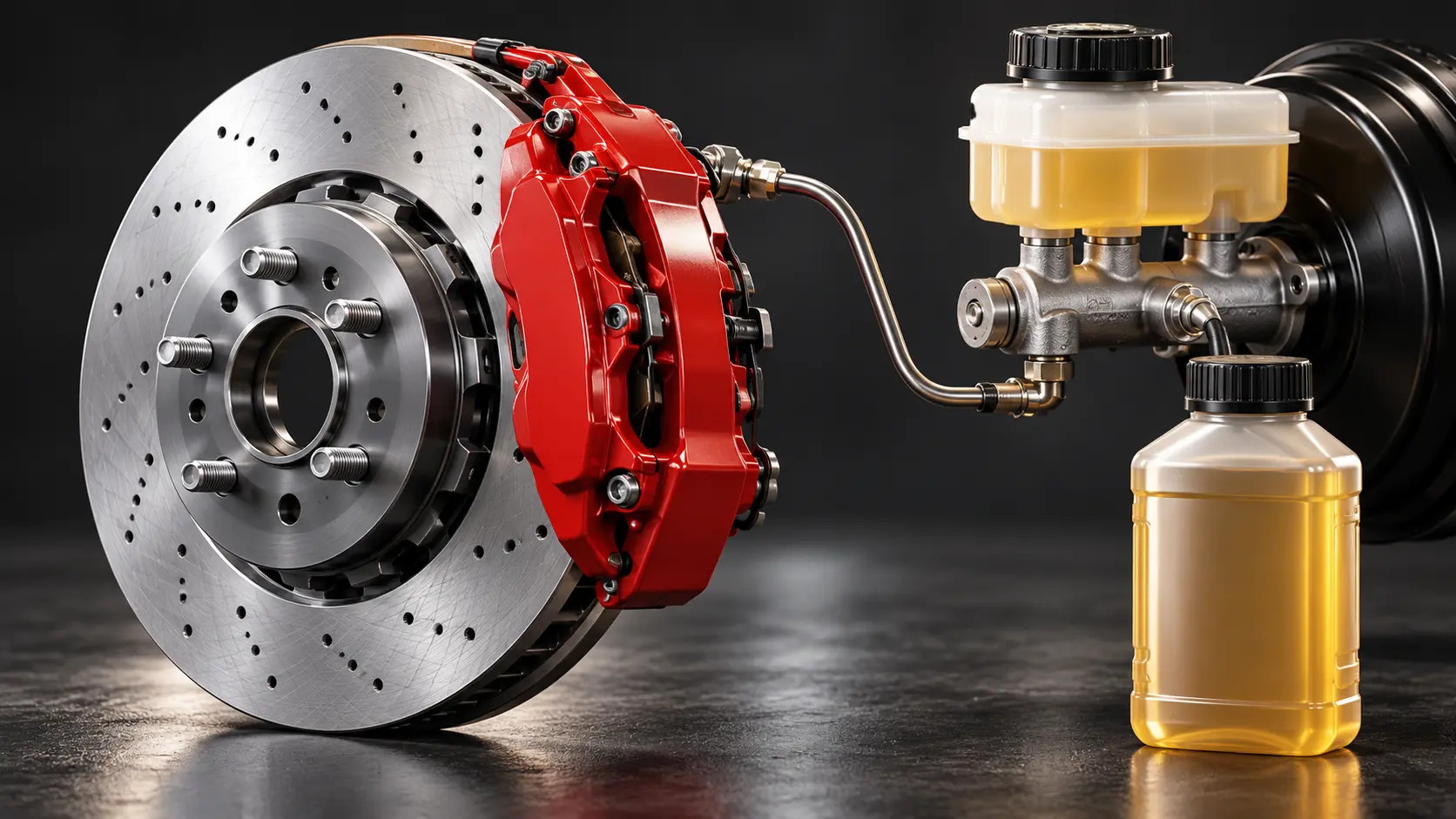
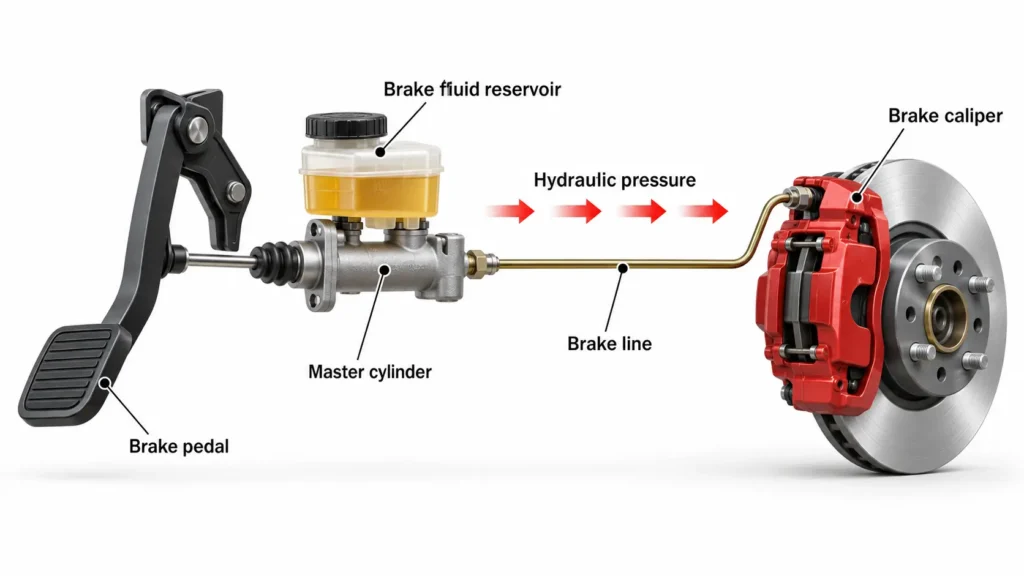
Brake fluid works as a medium that carries the pressure created when you push the brake pedal. When the pedal is pressed, the master cylinder builds pressure in the system. This pressure is then carried by brake fluid through the brake lines to the wheel brakes. The wheel brakes on your vehicle may be disc brakes that use calipers. They may be drum brakes that use wheel cylinders.
Hydraulic pressure is used to force the brake pads against the brake discs or the brake shoes against the brake drums. Then friction is applied to slow down the vehicle; hence, the vehicle is stopped.
The brake fluid must be efficient under pumping, pressure, and at high temperatures. Additionally, it has to resist boiling under heat and work in cold weather. That is why the right type matters.
Which Brake Fluid Does My Car Need?
Choosing the right brake fluid may not be quite that simple, such as simply matching the number on the label. Certain cars also need a specific manufacturer approval or have extra viscosity requirements, along with a specific type of fluid. This is especially true for vehicles that feature high-tech braking systems.
Always check your vehicle owner’s manual first, before finalising the brake fluid. The brake fluid reservoir cap specifies what DOT classification is required and other specifications, including:
- A specific grade of viscosity, also called a low-viscosity fluid, used in modern ABS and stability-control systems.
- A manufacturer (OEM) specification stated in the manual.
- The product’s technical data sheet (TDS) and compatibility information.
Having a higher DOT number does not make your fluid automatically better. DOT 5.1 is not “better” than a DOT 4 brake fluid for every car, and DOT 5 is a completely different chemistry. Hence, use what the manufacturer states.
For a broader look at how brake fluid contributes to vehicle performance and why product quality matters, explore our guide to the role of brake fluid manufacturers in vehicle performance.
H2 DOT 3 vs DOT 4 vs DOT 5 vs DOT 5.1
A detailed comparison table: H2 DOT 3 vs DOT 4 vs DOT 5 vs DOT 5.1.
DOT class | Typical chemistry | Minimum dry boiling point | Minimum wet boiling point | Vehicle-selection limitation |
| DOT 3 | Glycol-ether-based | 205°C | 140°C | Use only if the manufacturer allows it. |
| DOT 4 | Glycol-ether-based, often with borate esters. | 230°C | 155°C | Some systems also need a low-viscosity grade. |
| DOT 5 | Silicone-based. | 260°C | 180°C | Not compatible with glycol fluids; use only if specified. |
| DOT 5.1 | Glycol-ether-based (not silicone) | 260°C | 180°C | Use only if specified; it is not the same as DOT 5. |
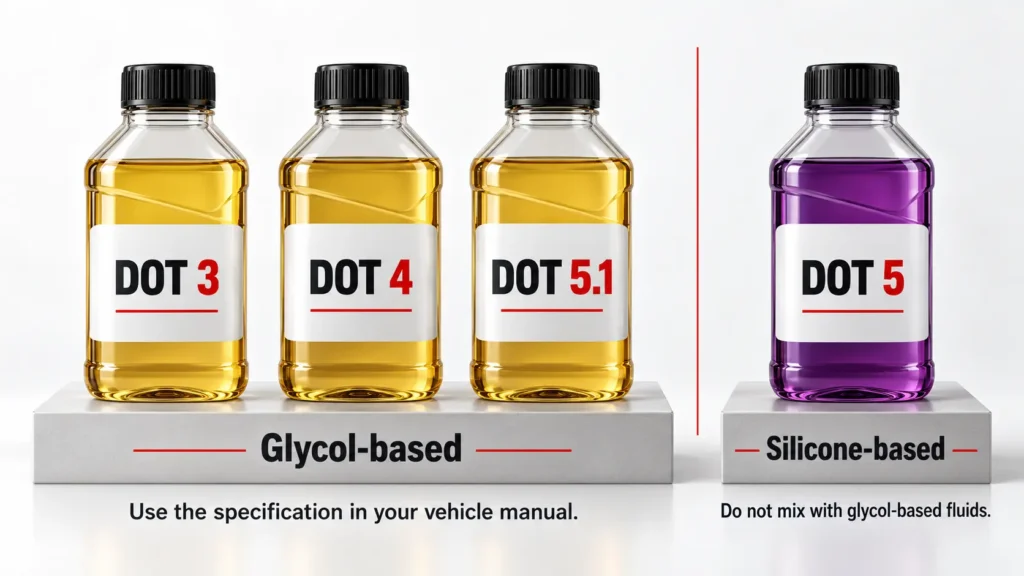
DOT 3: Usually found in older models and some current vehicle braking systems. Compatibility is based on the manufacturer’s specification.
DOT 4: Frequently used where vehicles need a higher minimum boiling point than DOT 3. Formulation and approvals still come into play here.
DOT 5: A silicone-based fluid with distinct chemical characteristics from the glycol-based groups. It cannot be directly substituted for a DOT 4 or DOT 5.1.
DOT 5.1: Despite its name, this is a non-silicone, glycol-based fluid. It shares the stated minimum boiling points of DOT 5 but is chemically different. It has a distinct chemical structure.
Why Do Dry and Wet Boiling Points Matter?
The dry boiling point is defined as the boiling point at which the fluid is tested fresh and dry at the standard test condition. The wet boiling point is the measured boiling point of the fluid after water saturation in a standard laboratory test up to a specified water level.
Glycol liquids also absorb water from the air, eventually, even in a closed system. Hence, this reduces the boiling point. The wet number is not water you’ve poured in the car’s cap from your bottle. If fluid becomes too hot, vapour bubbles can form. The pedal may then go soft. UAE heat and humidity give context, but they are not proof of a shorter interval across the board. Follow the recommended interval. This can be dangerous if ignored.
Can You Mix Brake Fluids or Add Water?
No, water is never a replacement for brake fluid, but it does affect the properties of the brake fluid. It lowers the fluid’s boiling point and causes corrosion. Never intermix silicone-based DOT 5 with glycol-based fluids. They are incompatible.
DOT 3, DOT 4, and DOT 5.1 can usually be mixed. Just because they work well together doesn’t mean you should throw them in together. Use as directed by your manufacturer.
If you are not sure which fluid is already in the system. Do not add another fluid. Ask a professional to identify the fluid specification and the level of service needed.
How Often Should Brake Fluid Be Changed?
First, prefer the manufacturer’s schedule. Check the manual, or sometimes a separate service book. The manufacturer will specify either a distance or a time interval, or both. If you’re after an example figure, use just the one based on your own vehicle manufacturer.
Adhere to the service interval printed in your owner’s manual or attached maintenance booklet. Service intervals may vary by make, model, year, and brake system configuration.
Inspection – checking the level and condition and having the system checked.
Top-up – adding the specified fluid to a level that has dropped. This does not fix the cause.
Replacement – a service job done by a workshop, following the vehicle’s procedure.
One size does not fit all in replacement intervals. Don’t stick to a certain number of kilometres, since that can be different for each car in the UAE. Or, get a professional workshop to run some checks to figure out what might work best.
How Do You Know Your Brake Fluid Needs Attention?
The brake system may need inspection for several reasons.
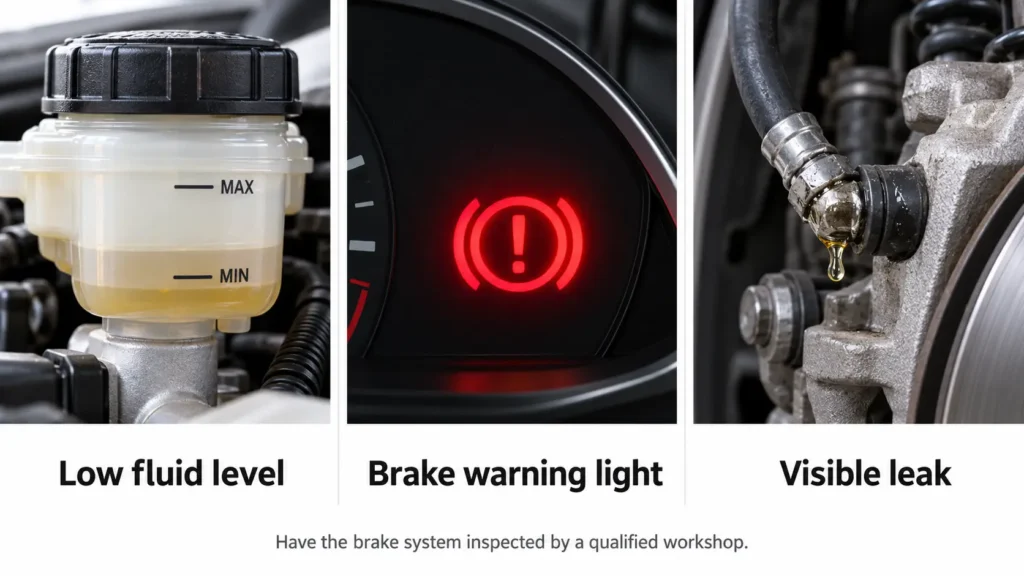
Low Fluid Level
The reservoir’s level is below the allowable zone determined by the vehicle manufacturer.
Warning on dashboard
A brake or fluid warning light comes on.
Changed pedal feel
The brake pedal is excessively soft or sponge-like or feels abnormal.
Visible leak
Fluid is seen around a wheel, hydraulic line, or other system component.
Inspection results
Tests or workshop inspections identify contamination, moisture, or boiling-point issues.
Colour alone cannot assure whether a fluid will hold moisture, what its boiling point is, or whether it is safe. The dark fluid is sufficient to warrant a test but not a test result.
If the level is low, then the brake pads may be worn, causing the pistons to be further out. Or it may also be due to a leak. Topping up is not a diagnosis or a fix. Discover the problem.
Can You Drive with Low Brake Fluid?
It’s not safe. Brake fluid drops when brake pads are due for replacement, or you have a leak, and both can compromise your braking performance. You may experience a soft or spongy pedal and may have longer stopping distances, or the brake warning light may be lit up.
The car might still roll, but braking distance is at risk in the event of an emergency, even in heavy traffic and on slopes. Your system needs to be checked out if you don’t have enough fluid. Filling it up is only a short-term solution; you need to get to the bottom of the issue as soon as possible.
If you need help identifying the right lubricant or fluid specification for your business, contact the Black Bulls team for assistance.
Is Brake Fluid the Same as Clutch Fluid or Power Steering Fluid?
No. Not all pressure fluids are the same just because they work in a similar way. Some hydraulic clutches need brake fluid, but not all clutches do. Always check the manual.
Product | Main purpose | Use the rule. |
| Hydraulic brake fluid | Transmits pressure in the braking system. | Use only the system-specified product. |
Clutch s ystem fluid | Transmits pressure in a hydraulic clutch; may be brake fluid or another fluid. | Use only the system-specified product. |
| Power-steering fluid | Helps the steering system work; also lubricates and protects it. | Use only the system-specified product. |
| Brake grease | Lubricates certain brake parts such as slide points. | Not a hydraulic fluid; use only where specified. |
| Engine oil | Lubricates and protects the engine. | Never use it in a brake or hydraulic system. |
Do ABS Cars and Electric Vehicles Need Different Brake Fluid?
There is no one answer. You must use the brake fluid that your car requires, including any viscosity rules. Many cars that have ABS use DOT brake fluid. Some call for a special type of brake fluid. Electric and hybrid cars use regenerative braking. This system helps slow the car by using the motor. It doesn’t take the place of hydraulic brakes. So you still need to check and service the brake fluid as the manufacturer says.
Brake grease is not the same as brake fluid. It’s a product. If you want to know more about brake lubrication for vehicles, read our article on EV brake lubricant and brake noise.
Checking and Handling Brake Fluid Safely
- Follow the vehicle manual: find out the brake fluid type to use and the checking method.
- Check the fluid level: where safe and accessible, maintain the level between the MIN and MAX lines.
- Warning Signs. Brake warning lights, leaks, low fluid, or signs of contamination are all red flags.
- Avoid contamination: Do not allow dirt, water, oil, or other fluid to get in the fluid or for the fluid to get out of its original, closed container.
- Prevent mishandling and store safely: wear appropriate protective gear according to the Safety Data Sheet (SDS) and keep the fluid in a safe place, dry and well-ventilated, and protected from heat and children.
- Dispose of waste responsibly: don’t dump your used brake fluid down the drain or on the ground. Follow disposal guidelines in your local area.
- Do not service yourself – avoid bleeding, flushing, ABS activation, dismantling, or wheel removal. Have brake-system servicing performed by a qualified workshop.
Frequently Asked Questions (FAQs):
Q1. How often should brake fluid be changed?
Follow the vehicle manufacturer’s recommended replacement interval. This can usually be found in the owner’s manual, and it is typically expressed in either time or miles.
Q2. Can I drive with low brake fluid?
Driving with low brake fluid can be unsafe. This may be a sign of a leak or worn parts. Do not drive the vehicle until it has been inspected by a professional.
Q3. Can I use brake fluid for power steering?
No. Brake fluid and power steering fluid do not have the same specifications. Power steering fluid is more likely to harm seals and other parts.
Q4. Is clutch fluid the same as brake fluid?
Some hydraulic clutch systems are compatible with the same specification as brake fluid. However, you should always check your vehicle manual before adding any fluid.
Q5. Does the brake-fluid colour reveal when to change it?
No. The condition of the brake fluid cannot be assessed based on colour only. The specified replacement interval must be followed, and a workshop must be consulted if the brake fluid condition is questionable.