Electric vehicles are meant to feel smooth, quiet, and almost effortless. That is part of the appeal. You press the accelerator and the car moves without engine vibration. You cruise through Dubai Marina or glide down Sheikh Zayed Road, and everything feels calm, until the brakes start squeaking.
For many EV owners, brake noise comes as a surprise. A Tesla, BYD, BMW i-series, Mercedes EQ, Audi e-tron, Porsche Taycan, Hyundai IONIQ, or Kia EV should not sound like an old car pulling out of a dusty garage. Yet brake squeal, clicking, rubbing sounds, and occasional grinding noises are more common in electric vehicles than many people expect.
The reason is not always worn-out brake pads. In fact in EVs, the issue is often the opposite. The brakes are not being used enough.
That is where EV brake lubricant and proper brake maintenance become more important than most owners realise.
Why EV Brakes Behave Differently
Traditional petrol cars rely heavily on friction braking. Every time you slow down, the brake pads press against the discs, creating stopping force. This regular friction also helps keep the braking surfaces clean.
EVs are different.
Most electric vehicles use regenerative braking. When you lift your foot off the accelerator, the motor slows the car down and recovers energy back into the battery. It is clever, efficient, and one of the reasons EVs feel so advanced.
But there is a small catch.
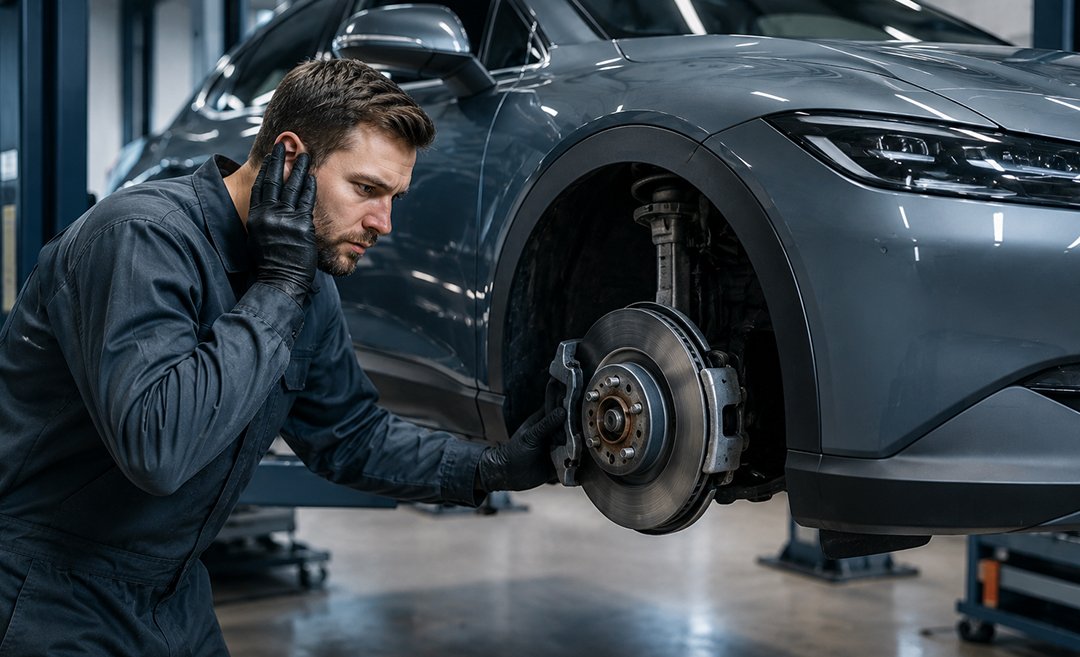
Because regenerative braking does much of the work, the physical brake system can sit unused for long periods. The pads, discs, caliper pins, and contact points may not move as frequently as they would in a petrol car. Over time, this can lead to light surface rust, dust build-up, dryness, or sticking components.
And then comes the noise.
That sharp squeak at low speed. The soft rubbing sound after parking overnight. The little click when reversing out of a parking spot. These are the kinds of things EV drivers in Dubai often notice, especially because the cabin is so quiet.
There is no engine noise to hide anything.
So, Do Electric Vehicles Need Brake Lubricant?
Yes, but with an important clarification.
EVs do not need brake lubricant in the sense that you pour it somewhere or apply it to the braking surface. That would be dangerous. Brake lubricant is used carefully on specific non-friction contact points in the braking system, such as caliper slide pins, pad backing plates, clips, and other areas where controlled movement is required.
The aim is simple: reduce unwanted vibration, prevent sticking, protect against corrosion, and support smooth brake operation.
In a high-performance EV, this matters even more. These cars are heavier than many petrol vehicles because of their battery packs. They produce instant torque. They often run on large wheels. And in premium models, the expectation is not just stopping power – it is silence, refinement, and control.
In a premium EV, even a small brake squeak can disturb the refined driving experience.
Why Brake Noise Is Common in EVs
Brake noise can happen in any vehicle, but EVs have a few unique habits that make the problem more noticeable.
Regenerative braking reduces brake use
This is the biggest reason. If you drive mainly in one-pedal mode, your friction brakes may only work during emergency stops, steep ramps, or the last few metres before the car comes to a complete stop.
That means the pads and discs do not always get enough natural cleaning through regular use.
EVs are extremely quiet
In a petrol car, small brake noises are often masked by engine sound, gearbox movement, exhaust note, or cabin vibration. In an EV, even a minor squeak feels louder because the rest of the car is so silent.
Dubai’s climate does not help
Heat, humidity, sand, dust, and frequent parking in basement or coastal areas can all affect braking components. Long parking periods can also allow light corrosion or residue to build on brake discs.
Then, when the car moves again, the first few brake applications may sound rough.
Premium EVs often use performance braking setups
Many luxury EVs come with large brake discs, performance pads, and advanced braking systems designed to handle serious weight and speed. These systems are effective, but they can also be sensitive to dust, temperature, and improper lubrication.
A small dry contact point can create a very irritating sound.
What Brake Lubricant Actually Does
Good brake lubricant is not there to “make the brakes slippery”. That is a common misunderstanding.
It is used only where metal parts slide, rest, or move against each other. When applied correctly, it helps with:
- Smoother caliper movement
- Reduced brake squeal caused by vibration
- Protection against heat and moisture
- Less sticking around guide pins and clips
- More consistent braking response
For EVs, this is especially useful because the mechanical brake components may not cycle as aggressively every day. Proper lubrication helps keep things moving cleanly even when regenerative braking is doing most of the work.
The key phrase here is “applied correctly”. Too much lubricant, the wrong type, or lubricant placed on the friction surface can create serious braking issues.
The Wrong Lubricant Can Make Things Worse
This is where EV owners should be careful.
Not every grease or lubricant is suitable for brake systems. Brakes generate heat. They deal with pressure, dust, moisture, and constant micro-movement. A general-purpose grease can dry out, melt, attract dirt, or damage rubber components.
For EVs, a proper brake lubricant should typically be high-temperature resistant, compatible with brake hardware, and safe for rubber parts where required. It should also support quiet operation without contaminating the brake pad or disc.
Using the wrong product can lead to more noise, uneven pad movement, sticking calipers, or reduced braking performance. And in a car that already depends on complex electronic braking systems, that is not a risk worth taking.
Signs Your EV Brakes May Need Attention
Not every brake sound means something is wrong. A little surface noise after washing the car or parking overnight can be normal. But repeated or worsening noise should not be ignored.
Watch for these signs:
Squeaking at low speeds
This is one of the most common complaints. It often happens when moving slowly through parking areas, reversing, or stopping gently at traffic lights.
Clicking when changing direction
If you hear a click when moving from drive to reverse, or reverse to drive, the brake pads or hardware may be shifting slightly within the caliper.
Grinding after parking
A rough grinding sound after the car has been parked for a while may be caused by surface rust or debris on the disc. If it disappears quickly, it may not be serious. If it continues, get it checked.
Uneven brake feel
If the brake pedal feels inconsistent, sticky, or less smooth than usual, there could be an issue with the caliper movement, pad fitment, or lubrication points.
Vibration or shuddering
This may point to disc condition, pad deposits, or uneven braking surfaces. It needs proper inspection rather than guesswork.
Does Regenerative Braking Replace Brake Maintenance?
No. It only reduces how often the friction brakes are used.
This is one of the biggest myths around EV ownership. Some drivers assume that because EV brake pads last longer, the braking system needs less attention overall. Pad life may be longer, yes. But the hardware still needs inspection.
In fact, low brake usage can create its own problems. Components that are meant to move can become dry or sticky. Discs can develop surface rust. Dust can settle around pad contact areas. Caliper slide pins can lose their smooth movement.
So while EV brakes may not wear out as quickly, they still need maintenance.
It is a different kind of maintenance – less about replacing pads often, more about keeping the system clean, lubricated, and moving correctly.
Dubai Driving Makes EV Brake Care Even More Important
Dubai is a great city for EVs in many ways. Smooth roads, premium communities, many charging points, and plenty of short urban drives. But those same conditions can create brake noise patterns.
Think about a typical EV owner in Downtown Dubai or Dubai Marina. The car may spend a lot of time in the basement parking. Most daily trips are short: office, gym, school drop, mall, dinner. Regenerative braking handles most slowdowns. Physical brakes are used lightly.
Add heat, dust, and occasional humidity, and brake noise becomes more likely.
Then there are high-speed road trips to Abu Dhabi or Hatta, where the brakes may suddenly be expected to perform at a higher level after weeks of gentle city use.
That is why preventive brake care is smart. Not dramatic. Just smart.
What a Proper EV Brake Service May Include
The solution is not always replacing brake pads. Sometimes the system simply needs cleaning, inspection, and correct lubrication at the right contact points.
A proper EV brake service may include:
- Brake pad and disc inspection
- Cleaning dust and debris from brake components
- Checking caliper slide pins
- Applying suitable brake lubricant where required
- Inspecting clips, shims, and hardware
- Checking for uneven pad wear
- Testing braking feel and noise after service
The goal is to restore quiet, smooth operation without unnecessary part replacement.
Can You Prevent EV Brake Noise?
You cannot prevent every sound forever, but you can reduce the chances.
Use the friction brakes occasionally. If your EV has strong regenerative braking, it helps to apply the brakes firmly from time to time in safe driving conditions. This can help clean the disc surface.
Do not ignore repeated squeaks. A small noise may stay small, but it can also point to dry hardware or uneven movement.
Wash carefully. After washing the car, light brake noise can happen because of moisture on the discs. A few gentle stops usually clear it.
Schedule brake inspections even if the pads look fine. EV brake maintenance is not only about pad thickness.
Use the right lubricant and the right technician. EVs are not ordinary vehicles, and premium EVs deserve proper product selection and careful application.
Quiet Brakes Matter More in an EV
There is something almost ironic about EV brake noise. The car is quiet because it is advanced, but that same silence makes every little sound more obvious.
For many drivers, the issue is not only mechanical. It affects the whole ownership experience. A luxury EV should feel composed. It should glide. It should not squeal while entering a valet lane at a hotel or turning through a quiet basement parking ramp.
Brake lubricant, when used correctly, is a small part of that bigger comfort story. It supports smoother movement, helps reduce vibration, and protects components that may not be used as often because of regenerative braking.
EVs may be the future of driving, but they still rely on physical systems that need care. Brakes are one of them.
So yes, electric vehicles do need brake lubricant as part of proper brake maintenance – not everywhere, not casually, and not as a quick spray fix. They need the right lubricant, in the right places, applied by someone who understands how EV braking systems behave.
For Dubai’s EV owners, that little detail can make a noticeable difference.
A quieter stop, a smoother drive, and the kind of refined comfort you expected when you bought the car in the first place.
For premium EV brake care, choose lubricants engineered for smooth performance, heat protection, and lasting reliability.
Trust Black Bulls to keep every drive quieter, cleaner, and confidently controlled.