
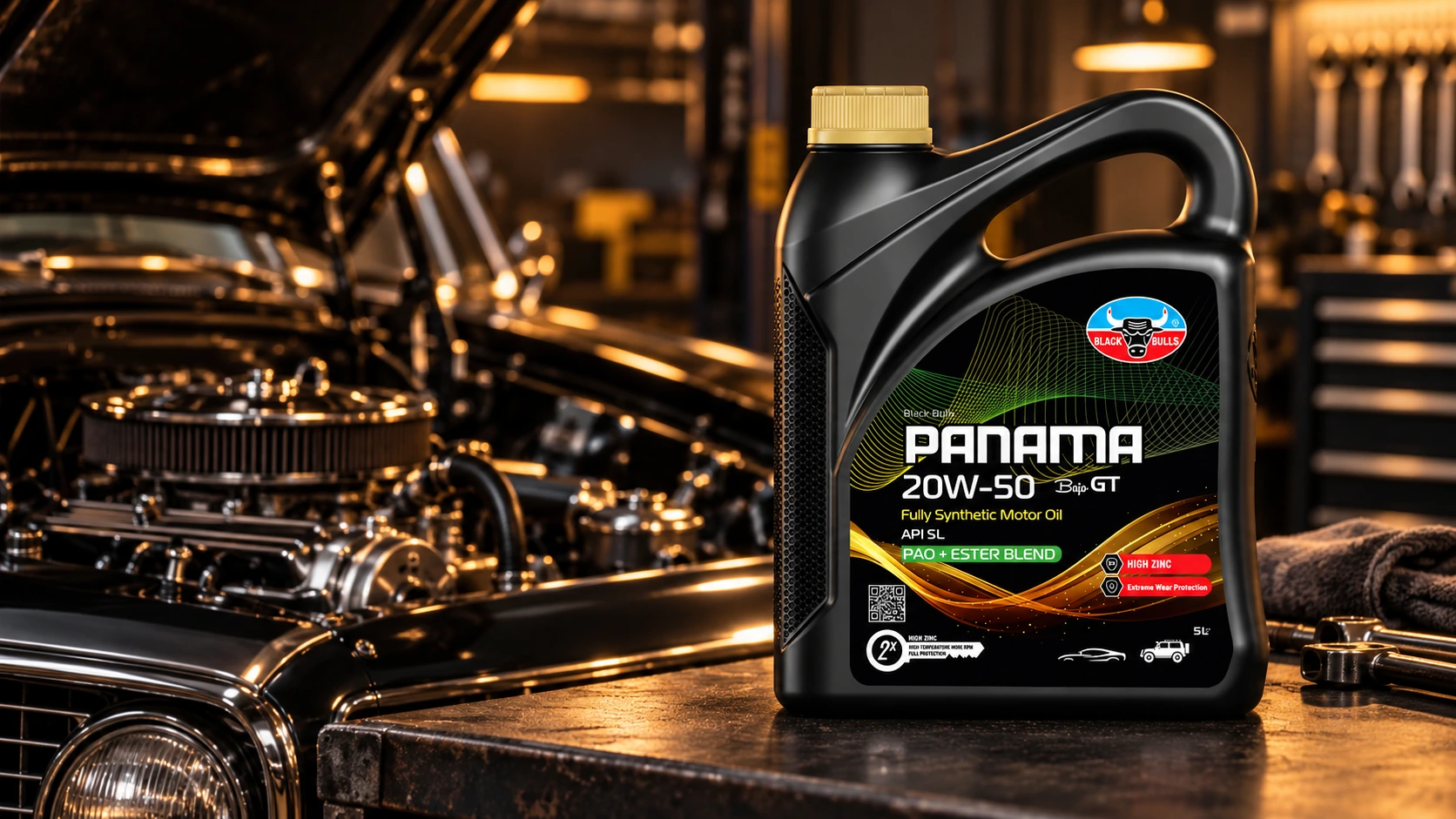
What is 20W-50 oil used for? Drivers can use 20W-50 in engines where the manufacturer recommends this viscosity grade, provided the oil also meets the required performance standards.
A vehicle’s age, mileage, or the UAE’s hot climate alone does not determine whether 20W-50 is suitable. Always check your owner’s manual or the engine manufacturer’s specifications before choosing an oil.
This guide explains what 20W-50 means, which engines may use it, its limitations, and how to check whether it is right for your vehicle.
What Does 20W-50 Mean?
Under the SAE J300, multi-viscosity oil has two classifications. The “W” stands for winter. The number before it (20) refers to the oil’s low-temperature operating classification based on a laboratory test (cold cranking and pumping viscosity test) performed under low-temperature, high-shear conditions. Whereas the number after (-) 50 defines its viscosity at a high temperature.
Two common misinterpretations to steer clear of:
- When the oil warms up, it does not become “20-weight oil that turns into 50-weight oil.”
- The numbers are not ambient temperatures.
Standard laboratory tests measure the oil under two different viscosity classifications.
Which Engines Can Use 20W-50 Oil?
20W-50 is not a universal grade. It is appropriate for some engines but only where the manufacturer specifies it. Manufacturers sometimes specify or approve 20W-50 for the following engines:
- Some vintage or classic cars’ engines, which are designed around looser tolerances and thicker oils.
- Certain motorcycle engines, depending upon the model and manufacturer’s recommendations.
- Additional engines: the manual lists 20W-50 as an approved oil grade.
These are definitely specific cases and not always applicable to all. Do not decide that 20W-50 oil is right for petrol, diesel, air-cooled, turbocharged, and SUV engines in general. Each engine needs to be checked separately because two engines of the same type may have different requirements.

Suitability check table:
| What to check | Where to find it | What you are looking for |
| Approved viscosity grades | Owner’s manual or manufacturer data | 20W-50 is listed as permitted. |
| Performance specification | Manual and the oil’s label | The required specification is met (API, ACEA, JASO, or OEM approval, as applicable). |
| Engine and model details | Registration, manual service records | Details match the manual’s entry. |
| Operating conditions | Manual guidance | Any manufacturer notes on climate or use |
| Uncertainty | Qualified technician or manufacturer | Confirmation before changing grade |
Is 20W-50 Suitable for UAE Heat?
The UAE’s hot climate can put extra demand on the engine, which requires an oil with thicker viscosity; however, 20W-50 oil isn’t applicable for all vehicles. The right engine oil depends on your manufacturer’s recommendation and engine type.
While 20W-50 is a heavier viscosity oil, it is only intended for use in engines that require 20W-50. Using a thicker engine oil than required may affect the engine performance and fuel efficiency.
Before buying oil, check the viscosity grades listed in your owner’s manual. Our guide to choosing the right engine oil viscosity explains how to interpret the grades. UAE heat alone is not a reason to switch to 20W-50.
What are the Disadvantages of Using 20W-50 when it is not specified?
The disadvantages are listed below as follows:
Slower Cold-Start Flow – The 20W-50 grade is expected to flow more slowly at cold start than the recommended grade, resulting in delayed lubrication to engine components until operating conditions improve.
Increased Pumping Resistance – Use of heavier oil may cause the engine pump to work harder to circulate the oil, especially at cold start conditions.
Reduced Fuel Economy – Increased viscosity can cause additional internal friction and pumping losses that may lower fuel efficiency.
Altered Engine-System Operation – Using the wrong viscosity may affect systems such as variable valve timing and hydraulic tensioners, depending on engine type and manufacturer.
Potential Compatibility Concern – If the viscosity of the 20W-50 is not within the recommended range, it might not deliver the desired lubrication characteristics under all of the engine’s operating conditions and temperatures.
These are simply options requiring technical assessment, not assured results. An undefined grade does not necessarily indicate wear or damage, and you cannot identify an engine by oil grade alone.
Once you’ve used a grade not listed in your manual, a mechanic can evaluate your individual engine and give you guidance.
Can You Use 20W-50 Instead of 10W-40 or 20W-40?
These grades share some classifications and differ in others. 20W-50 and 20W-40 have the same ’20W’ cold classification but differ at high temperatures (50 versus 40). 20W-50 and 10W-40 differ in both, with 10W-40 having the lower cold classification and a lower hot classification.
| Grade | Cold (W) classification | Hot classification |
| 20W-50 | 20W | 50 |
| 20W-40 | 20W | 40 |
| 10W-40 | 10W | 40 |
All of these aren’t automatically superior. What you want to know is:
- Does your producer allow the grade?
- Does it meet the performance requirement?
- Verify what grades are permitted in your handbook.
- Ensure the acceptable marking in your handbook is not one for the other just because the figures appear to be similar.
Is 20W-50 Suitable for High-Mileage Engines?
Mileage alone is not enough to justify a thicker oil. A high-mileage vehicle should be switched to a grade of oil that is permitted by the manufacturer. Unless a trained expert recommends a different grade for a documented reason.
If an engine is using oil, then the reason needs to be determined. Going a grade heavier isn’t a fix, and it won’t be able to guarantee against smoke, leaks, or wear. Think of oil consumption as a problem to investigate as opposed to a problem to cover up with an alternative viscosity. The technician can diagnose the real issue.
What Else Should You Check Before Choosing 20W-50?
Viscosity is just one factor in selecting the right oil; consider the following factors:
Performance specification: the oil must be suitable for use in your engine. The viscosity grade won’t specify this; one has to check the specification on the container’s label.
Base-oil type: Engine oils are commonly described as mineral, semi-synthetic or fully synthetic. Learn about the different types of engine oil alongside checking the viscosity and performance specification your engine requires.
Applications: Cars, motorcycles and diesel engines can have different oil requirements. Our guide to OEM versus aftermarket engine oil explains what to check when matching an oil to your manufacturer’s specifications.
Two specific areas call for verified sources:
Classic Engines – There may be particular additive considerations in classic engines. Make sure these are checked with the manufacturer, marque specialist, or published technical guidance before relying on general advice.
Motorcycles with wet clutches – they need JASO approval, signaled through JASO classifications. Verify with your manual, the label on your oil, and the manufacturer if you need clarification.
How to Check Whether 20W-50 Suits Your Vehicle
Ensure 20W-50 is compatible with your vehicle by following this checklist before you select or change the engine oil.
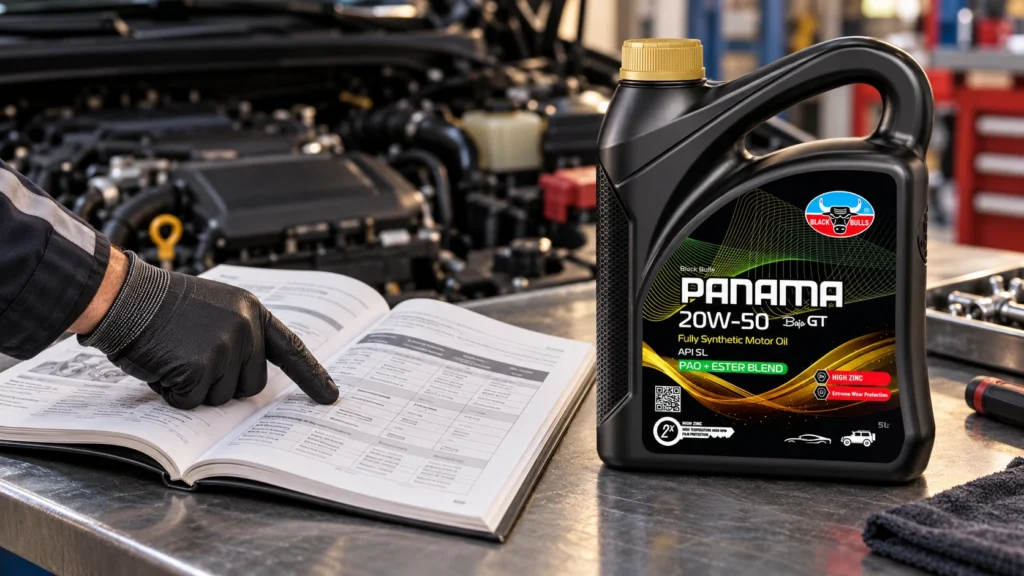
- Consult the owner’s manual – Make sure that 20W-50 is an approved engine oil grade for your engine.
- Monitor the oil level – Pay attention to how much you are topping up between services.
- Check the state of the engine – Observe if there is blue smoke, any leaks that are visible, or if the performance is not good enough.
- Consider Climate – 20W-50 doesn’t move as quickly in the winter, making it more appropriate for hot environments.
- Consider your driving – Heavy loads, long distances, or stop-and-go conditions will influence what you need to decide.
- Ask a mechanic if in doubt – Check the engine if oil consumption is high or there is a reason for this.
Choosing the correct oil is only part of maintenance. Follow your manufacturer’s service schedule and read our guide on how often to change engine oil for the factors that can affect the interval.
Conclusion
20W-50 is a thicker oil grade that works well for some older or worn engines and vehicles operating in higher temperatures or under severe loads. But it’s not the right choice for every vehicle. Thicker oil takes longer to circulate in cold weather, may decrease fuel economy, and won’t help worn components or eliminate smoke, leaks, or engine wear.
Before you purchase, ensure the oil is the correct grade. Review your owner’s manual for the specified grades, and choose the right one as per the climate, driving conditions, and oil use.
Not sure about 20W-50 for your car? Contact the Black Bulls tech support team.
Confirmed that 20W-50 meets your engine’s requirements? Check the Black Bulls BAJA GT 20W-50 product details before buying.
Frequently Asked Questions (FAQs)
Q1. What is 20W-50 oil used for?
20W-50 can be used in any engine for which the owner’s manual allows this viscosity grade. Ensure you also follow the performance standards your manufacturer is asking for, in addition to the right grade of viscosity.
Q2. What does 20W-50 mean?
20W-50 has a dual SAE viscosity marking: 20W is for cold flow performance; 50 refers to viscosity at operating temperature. It does not specify a temperature range, and it doesn’t imply the oil chemically alters itself when heated.
Q3. Which engines can use 20W-50?
It can be used for an older or worn engine or when operating in a hot climate or under a heavy load. This is only with the manufacturer’s approval. Additionally, ensure that you’ve checked your engine for the recommended grades.
Q4. What are the disadvantages of 20W-50?
20W-50 may not be recommended for cold weather areas because of its slower-starting flow or if your engine needs a thinner oil. The 20W-50 will not fix engine wear, and it can potentially lower fuel economy in some engines.
Q5. Is 20W-40 or 20W-50 better?
Both are of no particular superior quality. 20W-40 viscosity decreases when hot, compared to 20W-50, which has a higher viscosity. Stick to what your manufacturer recommends for your engine and operating temperature.